Track Lights
 Linear Lights
 Track System
 Decorative Lights
 Recessed Light
 Pendant lights
 Surface mounted lights
 Panel lights
 Street Lighting
 Magnetic Lighting System 48V
 Magnetic Lighting System 48V
 Invertors
 Lighting control
HoReCa lighting
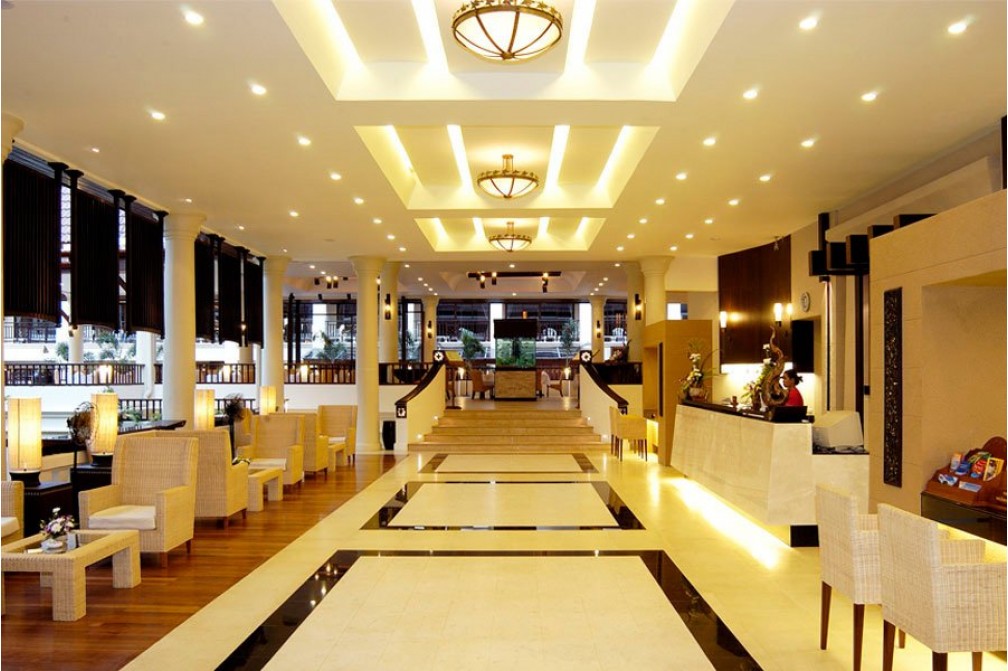
Lighting for hotels, restaurants and cafes (HoReCa)
The hotel, restaurant and cafe industry (HoReCa) needs a special approach to interior design. HoReCa guests want high-quality service and want to enjoy the atmosphere of the cafe or hotel itself.
We do not know how to deliver first-class service in a hotel or a cafe. But we do know how to fill an interior with light so that the atmosphere attracts visitors and the design of the rooms does its job.
Hotels, restaurants and cafes use both decorative and multifunctional light sources. Decorative luminaires work as interior and decor items. They draw attention and decorate the room, but they have one drawback: the quality of their light output is low. Decorative luminaires look good but light poorly.
Functional light is aimed purely at solving lighting tasks. Such a luminaire looks more like a tool or a precision instrument than a decorative element. Functional luminaires stand out from other light sources by their luminous flux. Their beam angle, luminous intensity distribution, colour temperature and colour rendering are calculated.
We recommend combining decorative and functional light when working on HoReCa interiors.
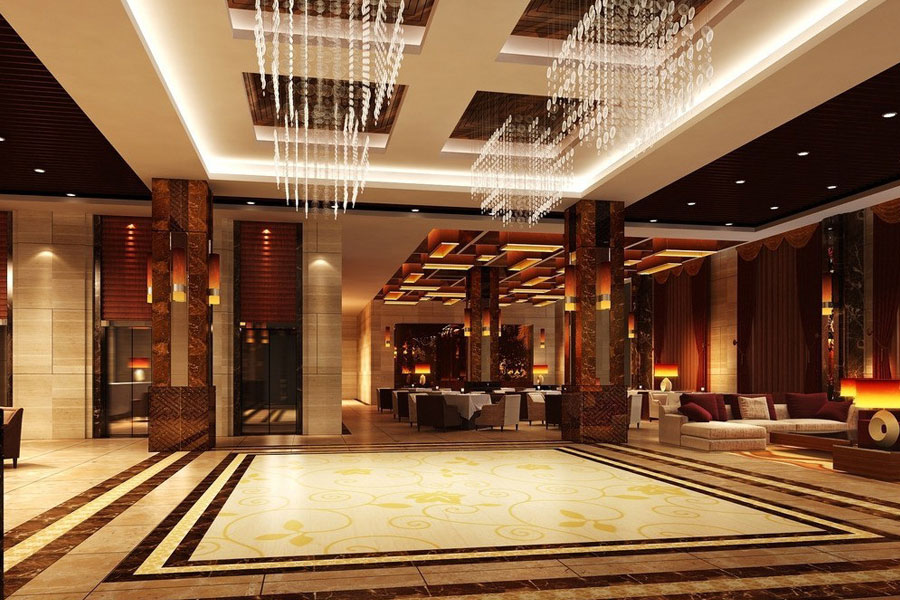
Light for hotel lobbies, halls and reception
One of the main areas of any hotel is its lobby, the central hall with the reception. This is where visitors get to know the atmosphere, where meetings are held, and the central hall sets the style of the whole building.
When working on a hotel lobby interior, it is important to use high-quality finishing materials, keep to the style of the design project and light every functional area properly.
A hotel lobby and central hall usually have several functional areas: the place where guests are met and checked in (reception), the area where guests relax and wait, and the places where people cross paths (approaches to lifts and stairs, entrances).
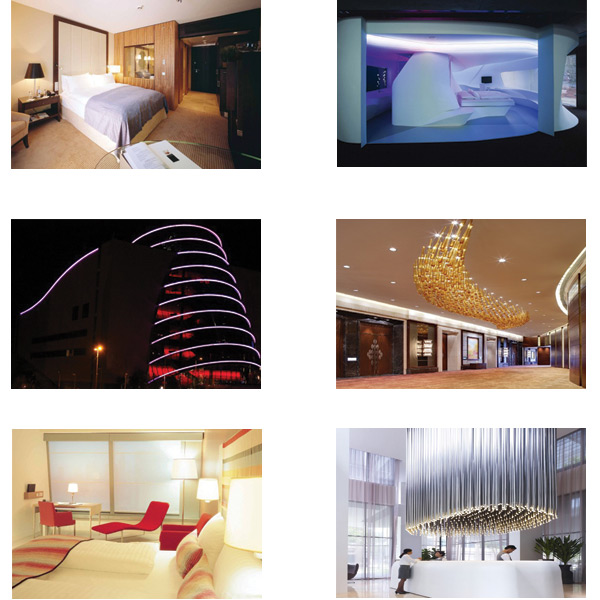
A hotel reception needs plenty of light
This is the busiest part of the interior: staff and guests spend the most time at reception. Reception should be flooded with light and made a bright accent. It should work as a clear magnet, so that guests see at once where it is and go straight to it. Psychologically, guests find it easier to orient themselves by bright objects and are drawn to them. Reception lighting works best as a combination of general, accent and decorative light.
Recessed downlights or surface-mounted luminaires work well as flood light sources.
Accent light sources, track spotlights, are used to light the back wall of the reception, signs and key racks. Spotlights create a sense of volume when lighting interior items.
Decorative lamps and floor lamps can be placed on the reception desk.
The recommended light level on the reception desk is up to 1500 lx, and general lighting in the reception area is 300 to 600 lx.
Lighting the lounge and waiting area
It is good when the lobby has a place for guests to relax and meet visitors, with wide leather sofas, comfortable armchairs and floor lamps.
Lounge areas are best lit with calm, warm lighting scenes. A lot of light, as at the reception desk, would spoil the impression. Here you can do without ceiling general lighting.
Floor lamps with warm light look good next to sofas and armchairs.
Pendant luminaires with a narrow beam look good above coffee tables.
Track spotlights (accent light sources) can add volume by lighting a decorative element of the interior.
The light level in lounge and waiting areas is 250 to 300 lx; on coffee tables and work surfaces it should be raised to 500 lx. The preferred colour temperature is 2700 K to 3500 K.
Walkways, entrances and lifts must be well lit
Accent and decorative light are unnecessary here. These areas are for moving people quickly, and nothing should get in the way of guests with suitcases, bags and trolleys.
Recessed spots, downlights and surface-mounted luminaires with wide beam angles suit entrance areas.
In such places it is important to use luminaires with a low glare rating (UGR). Low-UGR luminaires have matt reflectors, and the light source (LED chip or metal halide lamp) sits deep inside the body.
The general light level in walkways, entrances and lifts should not drop below 400 lx, otherwise there may be problems when guests and their luggage are moving around a lot.
Light for restaurants
Restaurant lighting work falls into two big parts: light in the dining room and light in the kitchen.
Restaurant kitchen lighting
A restaurant or cafe kitchen has strict lighting requirements. There must be plenty of light, because it is a work area with a risk of injury. Under sanitary standards the average horizontal illuminance in a kitchen should be 150 lx. In practice, 150 lx is not enough for comfort.
We recommend lighting work surfaces to 500 lx and bringing the average horizontal illuminance of the room up to 300 lx.
Since a kitchen has a lot of steam and grease, the luminaires must be protected against grease, splashes, water and steam getting inside the body. The recommended protection rating for professional kitchen luminaires is IP44 or higher. It is better to use neutral white light (4000 K) with normal or high colour rendering (at least 80 Ra).
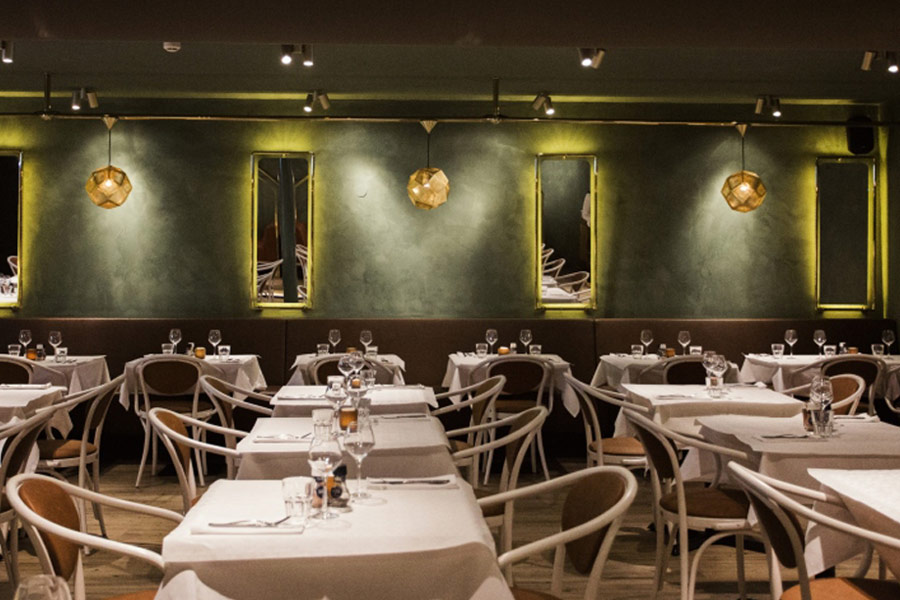
Restaurant dining room lighting
There are no such strict rules for the dining room as for the kitchen. The lighting layout depends on the design, style and theme of the venue. Interior designers can bring the most eccentric ideas to life in the dining room lighting.
There are two main rules for lighting a room where guests are welcomed and served:
- Guests should like the lighting layout and the atmosphere it creates.
- The colour rendering of the luminaires should be 90 Ra (at least 80 Ra), otherwise the colour of the food and dishes is distorted.
Since there are no other rules for the dining room, any light source can be used: track spotlights, recessed luminaires, surface-mounted luminaires, gimbal systems or pendants.
Pendant luminaires with a medium or narrow beam angle suit table lighting.
For general lighting of the room, ceiling-mounted luminaires with adjustable heads work well. If the dining room has plasterboard or suspended ceilings, recessed downlights, spots and even gimbal systems can be used.
Track spotlights are used to light interior items and decorative elements of the restaurant.
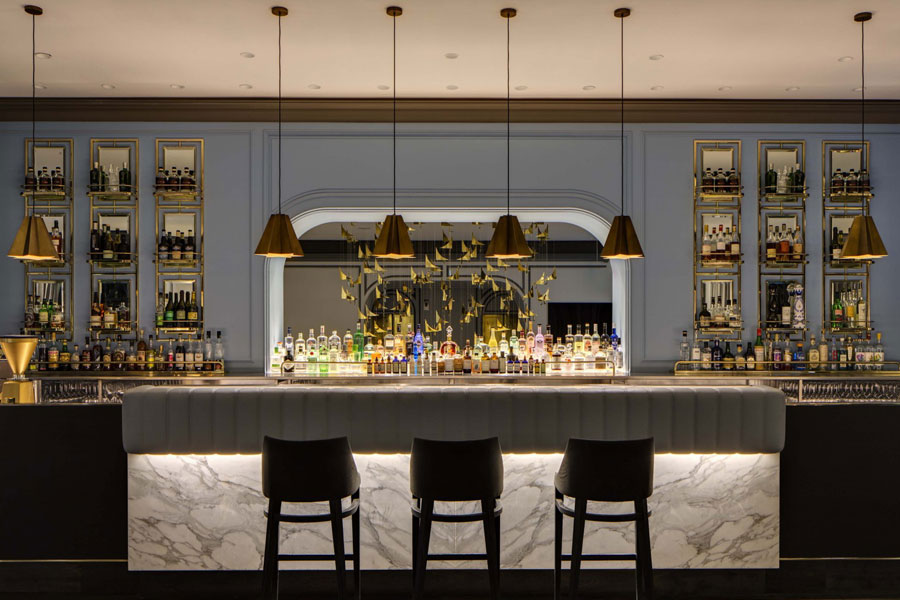
Bar counter lighting
The bar counter in a cafe or restaurant is traditionally one of the main elements of the interior. It is the first thing that catches the eye, and its design and the display behind it shape the impression of the whole venue.
The bar counter itself is best lit with pendant luminaires. They can be hung low over the counter top, which adds drama to the lighting. An interesting visual effect can also be achieved with recessed spots or surface-mounted luminaires with the light source (LED chip) set deep in the body.
It is better to use more low-power luminaires with a narrow accent beam than a few powerful wide-angle light sources.
Remember that alcoholic drinks do not tolerate heat or a lot of ultraviolet radiation. So it is better to use LED luminaires rather than metal halide lamps: they heat the air less and emit less UV.
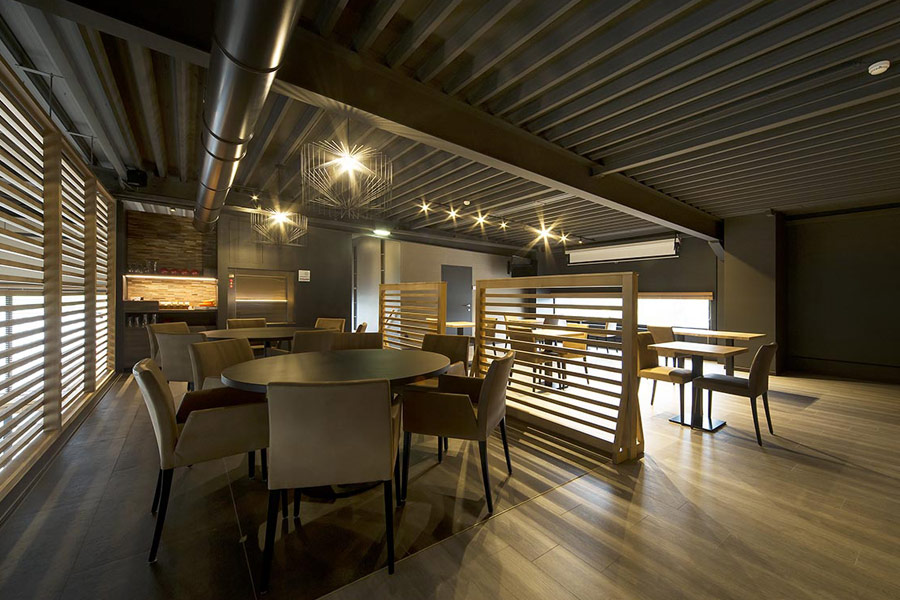
Cafe lighting
A cafe differs from a bar or restaurant in its more casual, simpler style of design and service.
A cafe usually has no classic bar counter, but it has a large display and service counter where the cashier, barista and waiter work. The whole cafe range is usually visible in this display counter.
There are only two rules for cafe lighting:
- a bright, well-lit display and service counter;
- high colour rendering of the light sources.
Cafe display lighting can be done with pendant and surface-mounted luminaires.
The background with the menu and decorative elements is best lit with accent light sources, such as track spotlights or adjustable recessed luminaires with a medium or narrow beam.
Food court lighting
Food court lighting is similar to cafe lighting, but it has its own features:
- food courts are rarely on their own; they usually compete with neighbouring food court counters;
- food courts are most often located in shopping and business centres with high light levels.
These features lead to the lighting rules for food courts:
- the average light level at a food court counter should be 20 to 30% higher than in the hall where it is located;
- the illuminance of the counter top, displays and menu should match the light level of shop windows in the shopping centre.
The busiest food courts are the brighter and better-lit ones. If your counter is darker than your competitors', it will be hard to get the same footfall.
For food court counters and displays we recommend accent luminaires with neutral white light and high colour rendering.