Track Lights
 Linear Lights
 Track System
 Decorative Lights
 Recessed Light
 Pendant lights
 Surface mounted lights
 Panel lights
 Street Lighting
 Magnetic Lighting System 48V
 Magnetic Lighting System 48V
 Invertors
 Lighting control
Office lighting: standards, work areas and choice of luminaires

Why is office lighting important?
Offices depend more and more on computers and visually processed information. For this reason office lighting has never been more relevant than it is now.
Good office lighting makes your staff happier and healthier and reduces absences and costly downtime. Studies show that bright, spacious offices help motivate staff and increase productivity. The key is not to overdo it, as too much light affects people as badly as too little. That is why it is best to leave office lighting planning to professionals, such as Vision Lighting Ukraine.
When assessing office lighting, several functions need to be considered. Light supports not only vision but also has psycho-emotional and psychobiological effects. Office lighting should be chosen according to the design concept and the desired lighting scene. Floor and desk lamps can be used to raise the light level at workplaces, especially where computers are used.
The key criteria for office lighting are the illuminance in the room, dimming options, the direction of light, the right colour temperature and keeping glare and shadows to a minimum.
Recommendations for office lighting
A few recommendations will help you decide which types of lighting suit your office. Lighting should be flexible and energy efficient, and the optimal illuminance depends on how much strain a task puts on the eyes. Office lighting should be balanced and combine direct and indirect light sources, such as daylight and artificial light. If you use different types of luminaires, the visual strain is much lower than with lighting of a single type.

Let us look more closely at the types of luminaires that help organise office lighting correctly. The most common are:
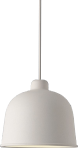
- Pendant luminaires or chandeliers. The simplest way to provide basic office lighting.
- Surface-mounted luminaires. Almost the same as chandeliers, but they take up less space and give more diffused light.
- Louvre luminaires. They give strong, non-directional, diffused light. On the downside, they work well only with suspended or stretch ceilings; otherwise such lighting has to be planned almost at the construction stage. But this option is considered the classic.
- Spotlights. A type of pendant that lets you light a small area precisely. The basis of individual office lighting.
- Desk lamps. The best way to provide individual lighting in an office. They let you adjust the level, intensity and direction of light.
- LED strips. They give diffused light but also suit individual lighting, and take up very little space.
- Wall luminaires. More powerful than LED strips but much less flexible.
When the light level at the workplace is right, employees get less tired and find it much easier to concentrate on any task. For computer work the illuminance at the workplace should be at least 500 lx. In general, more lux improves visual performance and has a positive effect on information processing. More complex tasks need a higher light level. Personal factors such as the age of staff should also be considered when providing individual lighting.
Lighting can create the right mood in an office through the choice of colour temperature. Colour temperature of light falls into three types and is measured in kelvin.
- Warm light (3000 K) is white light with a yellow tint that creates a cosy, homely atmosphere. It is rarely used in offices because it has a strong relaxing effect that makes it harder to concentrate on work. It can, however, be useful in conference rooms and break areas.
- Neutral light (4000 K) is the closest to daylight. This is the colour temperature most often used in offices, as it shows colours without distortion or exaggeration.
- Cool light (5000 to 6000 K) is white light with a blue tint. It is used relatively rarely, as long work under such light strains the eyes. But when you need to concentrate sharply on something, this light in an office can be useful.
It is important to place luminaires parallel to the windows and the actual work area, to avoid shadows and glare through a balance of natural and artificial light. Too much light next to a computer is as bad as too little. Excessive glare causes irritation and eye fatigue. For this reason office luminaires with a glossy surface are very rarely used: only matt ones, or ones finished so as not to create extra glare.
Good lighting also keeps the office safe, as potential hazards such as cables are easy to see and avoid. Not to mention that the lighting itself must not cause problems in terms of technical and fire safety.

How do you know how well your office is lit?
Ask yourself a few simple questions. Is there enough daylight? Are the luminaires chosen correctly? Is there a balance of direct and indirect light? Can the light intensity be adjusted individually? Is it comfortable to be in your lighting? Is the colour temperature right? Do you notice glare and reflections?
Do not just ask yourself, ask your staff. Employees like being asked to contribute and feel more motivated when their views are taken into account.
Most importantly, in Ukraine office lighting has long been regulated by the international standard ISO 8995. So you have real, objective parameters to follow:
- Illuminance: 500 lx; 750 lx for drawing offices where computers are not used.
- Discomfort glare rating (UGR): 19 (average value).
- Colour rendering index Ra: 80 (daylight that does not distort colour perception).
Office lighting standards: table by area
The required light level in an office depends on what people do in each area. Below are the reference values from EN 12464-1, the European standard for lighting of indoor workplaces that Ukrainian norms are based on. Illuminance is measured on the task surface; for desks that is a height of about 0.75 m.
| Area | Illuminance, lx | UGR, max | Ra, min |
|---|---|---|---|
| Computer work, reading, writing | 500 | 19 | 80 |
| Technical drawing, fine detail work | 750 | 16 | 80 |
| Meeting and conference rooms | 500 | 19 | 80 |
| Reception desk | 300 | 22 | 80 |
| Copying, filing | 300 | 19 | 80 |
| Archives | 200 | 25 | 80 |
| Toilets | 200 | 25 | 80 |
| Corridors | 100 | 28 | 40 |
UGR shows how much glare a luminaire causes: the lower the number, the more comfortable. Uniformity at the workplace should be at least 0.6, meaning the darkest point of the desk is no darker than 60% of the average. For screen work the flicker level also matters: a luminaire should stay below 5%, otherwise eyes get tired even when the flicker is not visible.
How to light an office: area by area
A single uniform light for the whole office rarely works. Each area has its own task, so the solutions differ.
Open space
The basis is linear pendant luminaires above rows of desks or low-UGR recessed panels in a grid ceiling. Luminaires are placed parallel to the windows and to the side of monitors, not directly above them, to avoid reflections on screens. Pendants with direct and indirect light (down onto the desk and up onto the ceiling) make the space brighter without glare.
Executive office
General light of 300–500 lx, plus separate light on the desk and the meeting corner. Dimming works well here: paperwork needs more light than a conversation with a visitor.
Meeting and conference rooms
Scenes are needed: full light for discussion, dimmed light for screen presentations, separate light on a flipchart or wall. Linear luminaires above the table combine well with track spotlights on the wall or board. Vertical light on faces matters for video calls.
Reception and lobby
This is the first impression of the company. Besides general light, highlight the desk and the logo wall. Use 3000–4000K and Ra 90 or higher if the area shows brand colours or materials.
Corridors, kitchen, support rooms
Corridors need 100 lx, and motion sensors keep the light from burning for nothing. The kitchen and break area can use warmer 3000K light. Escape routes require emergency lighting: battery-backed (EM) luminaires and exit signs.
Office luminaires: what to check when choosing
- UGR below 19 for workplaces. It is stated in the luminaire datasheet; an opal diffuser or microprism usually achieves it.
- Ra 80 or higher, and 90 or higher for design studios, receptions and meeting rooms.
- 4000K colour temperature for work areas, 3000K for break areas.
- Flicker below 5%: this depends on the driver, not the LEDs.
- Controls: DALI or presence and daylight sensors save 30–50% of lighting energy in offices with large windows.
- Mounting: linear luminaires for pendant, surface and plasterboard recessed mounting; panel luminaires for grid ceilings; track spotlights for receptions and meeting rooms.
Office lighting FAQ
How many lux does an office need?
500 lx at a computer workplace, 500 lx in a meeting room, 300 lx at reception, 100 lx in corridors. 750 lx for drawing and precision work.
What colour temperature is best for an office?
Neutral 4000K for work areas: it neither relaxes nor tires the eyes. Warm 3000K suits the kitchen, break area and executive office.
How many luminaires does a 20 m² office need?
To reach 500 lx on 20 m², allowing for losses, you need about 20,000 lm from the luminaires. That is 5–6 luminaires of 3,500–4,000 lm each. The exact number comes from a lighting calculation, since it depends on ceiling height, wall colours and desk layout.
Does an office need emergency lighting?
Yes. Escape routes need emergency luminaires and exit signs that run on batteries during a power cut.
Conclusion. A well-lit office is a sound investment when it comes to staff motivation and productivity. It also impresses visitors and potential clients. If you need help and advice, the lighting experts at Vision Lighting Ukraine will be glad to advise you and prepare a lighting calculation. So if the right office lighting matters to you, get in touch. We know what it should be like, and we will help you make it happen.