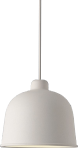
Track Lights
 Linear Lights
 Track System
 Decorative Lights
 Recessed Light
 Pendant lights
 Surface mounted lights
 Panel lights
 Street Lighting
 Magnetic Lighting System 48V
 Magnetic Lighting System 48V
 Invertors
 Lighting control
How lighting affects sales growth

It is logical to assume that a well-thought-out, stylish shop design brings more sales than a tired interior. Especially if the shop is lit in an interesting and proper way: this also helps sales and attracts more visitors, who will come back again.
Can we say with confidence that lighting is the reason for sales growth? After all, when assessing financial results, you have to consider economic factors, location, consumer trends, pricing and promotion, the season, fluctuating fuel prices, unseasonal weather, a big sports event on TV, an advertising campaign by the shop or the brand, good or poor customer service, product availability, when public holidays fall, and so on.
Vision Lighting shares the views of colleagues and research data on this question.
Lighting can guide shoppers
For example, in designing the wine and spirits shops of the Finist chain, Shopworks used a combination of subdued lighting to create an intimate atmosphere with accent lighting on the central display units to highlight products and make navigation easier. The lighting is in the cool part of the spectrum, which helps balance the bright, warm shades and textures of the shop interior. The design of the luminaires also helped shape the overall brand image: for example, the pendant luminaires above the tasting area, whose simple shapes created a loft feel. Placing ceiling elements and lamps above the aisles and along the shelves guides shoppers through the shop and increases the number of purchases.
Munish Datta, head of facilities management at Marks & Spencer, which recently switched to LED lighting in hundreds of its food stores, says the benefit of higher sales may in the end outweigh the savings from better energy efficiency.
Simon Waldron, electrical systems manager at Sainsbury's and a supporter of LED luminaires in leading retail, is, on the contrary, puzzled. "Whether LED luminaires increase sales is a very debatable question. You cannot guarantee that LEDs will cause sales growth, because there are so many variables and there is no substantial empirical data. More research is needed to see whether sales increase with LED lighting or other high colour rendering products."
Lighting in numbers
Anyone who can prove that a new lighting scheme will save money on the bottom line and increase sales at the top has a strong argument, so it is no surprise that people try to do it again and again.
In 2010 the Dutch supermarket group Plus ran a 21-week study together with Philips Lighting. The study looked at how light affects shopper behaviour using different LED lighting scenes. Philips Lighting brought in CQM as an external market research agency and the Retail Design Research Lab of PHL University of Hasselt to assess the return on investment of LED lighting systems for shops. A tracking system was installed on shoppers' baskets to follow their habits, such as the time spent in certain areas of the supermarket, their route through the shop and the departments they visited on purpose.
Adjustable AmbiScene lighting was installed in the left part of the shop, while the right part used conventional lighting, with different lighting scenes on different days. CQM's results showed that the lighting system increased sales by an average of 1.93% per shopper thanks to the dynamic lighting setup. Further analysis also showed that shoppers spent more time in areas lit with warmer light than in departments with cooler lighting.
Another fact: lighting manufacturer Zumtobel says a clothing shop in Germany saw sales grow by about 12% compared with another local shop after installing a new lighting scheme designed specifically around its target customers.
However, it is hard to say what other factors affected the two shops, or what would have happened if the lighting had stayed the same.
Six ways to improve retail sales
Zumtobel's research points to a number of ways to increase sales with lighting.
- Use contrast. Retail lighting should be high-contrast: it makes perception easier and raises attention.
- Distribute light correctly. Diffused general light creates a subjective sense of well-being. Vertical lighting makes orientation easier. The easier it is for shoppers to find their way, the more willingly they walk around the shop.
- Consider colour temperature. Cool light creates a sense of space, while warm light makes a space feel comfortable and cosy.
- Make shop windows work. Shop windows benefit from spot accents that emphasise contrast. In the evening or in weak daylight, even a low light level is enough.
- Light the bottom shelves. Directional accent lighting or dynamic lighting in the bottom third of the shelves can keep shoppers longer and may increase sales. Lighting integrated into shelves is recommended at all levels.
- Do not rely on accent lighting alone. Broad background lighting of shelves creates a more attractive effect than spot lighting alone.
Point of sale
A laboratory study by Zumtobel and Gruppe Nymphenburg measured responses to different lighting scenes in shops. "Time and again we see how underestimated lighting is at the point of sale. Instead of good lighting, the focus is on fancy packaging and shop design," says Dr Hans-Georg Häusel of Gruppe Nymphenburg. "But in reality, a product on display will only trigger emotions if it is presented in the right light."
In addition, an independent study carried out for Xicato by Dr Colette Knight showed that objects can look more attractive under light slightly outside the traditional colour range of white light. Participants preferred lighting that increased the saturation of red, blue and pink and made whites look "cleaner". "New LED technologies make it possible not only to imitate the properties of conventional light sources. With a well-designed light spectrum you can create different lighting impressions and optimise how the colours of objects are perceived."
Be creative with shop lighting
All this makes a case for good lighting. But turning visitors into buyers is a difficult task. Still, retailers are always looking for ways to make their shop stand out from others like it. Rod Pallister of Progress Lighting notes: "Shops need to become even more creative and experiment to keep existing customers and win new ones. New shopping centres aim to keep visitors on site. Most of them have bars, cinemas and restaurants as well as shops. They take an architectural approach to the whole design, and it has to be said that lighting plays a vital role in it."