Panel lights
 Linear Lights
 Track Lights
 Recessed Light
 Decorative Lights
 Track System
 Surface mounted lights
 Pendant lights
 Magnetic Lighting System 48V
 Magnetic Lighting System 48V
 Street Lighting
 Lighting control
 Invertors
Single-phase or three-phase lighting track for a store
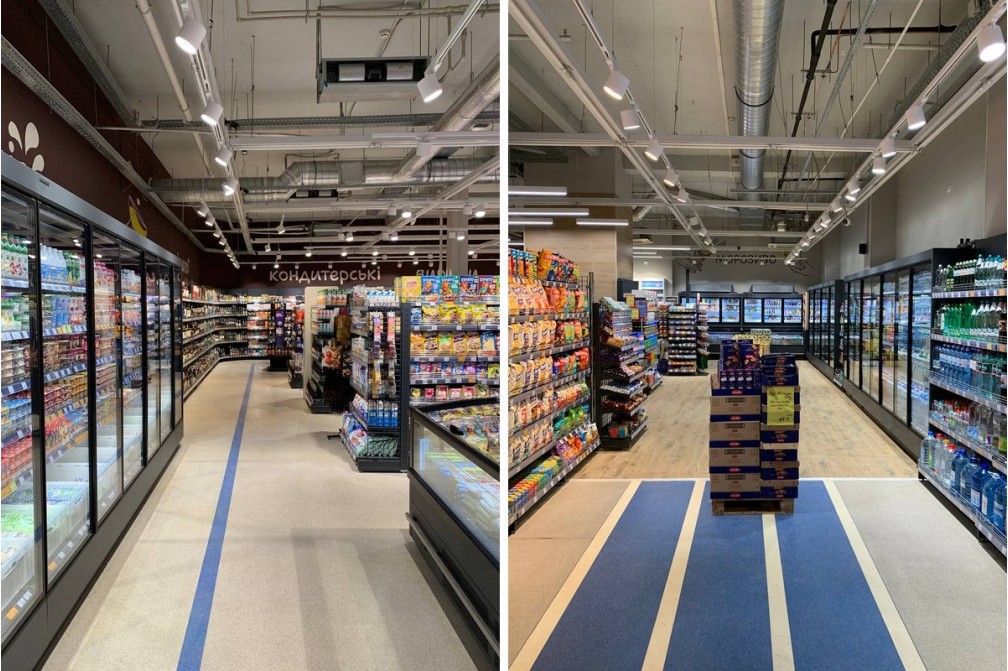
Catalogs split lighting tracks into single-phase and three-phase. Because of the word «three-phase», some buyers decide such a track needs a 400 V supply and pick a single-phase one, even when the store clearly needs separate lighting groups. Others take the «three-phase» track because it seems more powerful, connect it to one phase and load all three circuits to the limit. Both choices are wrong, and the second one is dangerous.
Here is how these tracks actually differ, how much load each one carries and how to choose one for your project.
Single-phase vs «three-phase» track: what is the difference
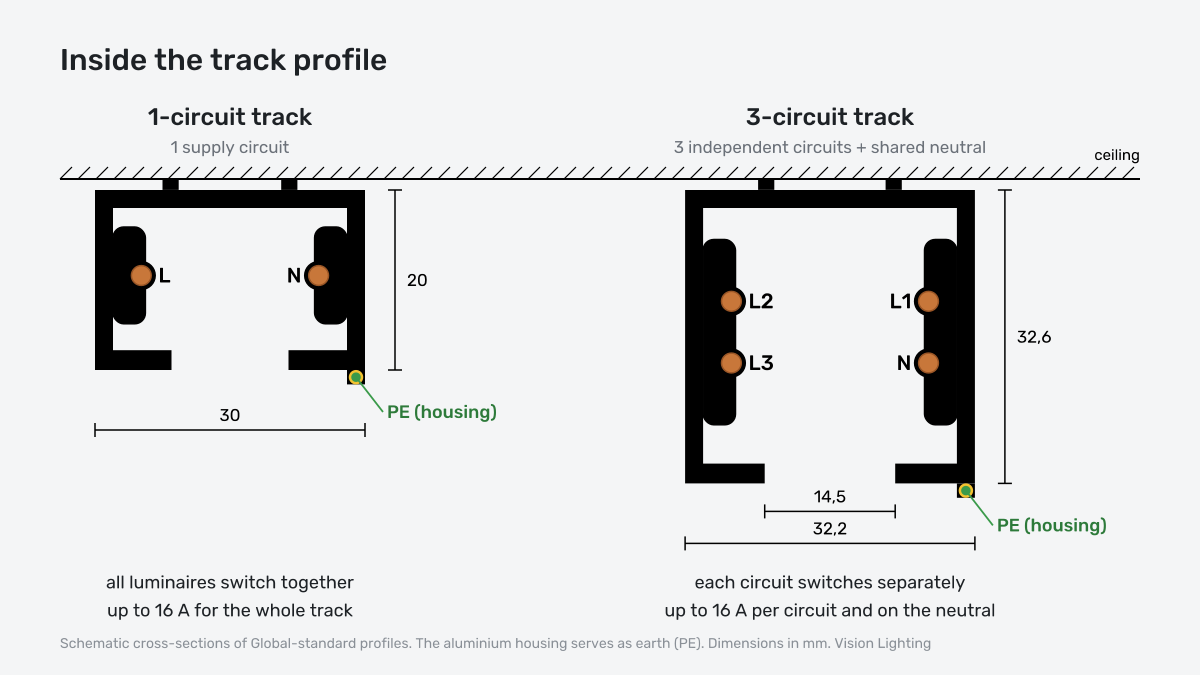
A single-phase, or 1-circuit, track has one live conductor (L), a neutral (N) and an earth (PE) inside. All luminaires on it switch on and off together, from one switch.
The track that catalogs call three-phase is more accurately a 3-circuit track. It has three separate live conductors L1, L2, L3, one shared neutral and an earth. Each luminaire connects to one of the three circuits, selected with a switch on its adapter. So one track can carry three lighting groups that switch independently, like a three-gang wall switch.
Does a 3-circuit track need a 400 V supply
No. A 3-circuit track can be fed from a single 230 V phase: the three circuits are connected to the same phase through one common circuit breaker of no more than 16 A, with three switches or relays after it. This is the usual setup for a store, a café or a showroom.
You can also feed the circuits from three different phases. Then there is 400 V between circuits, and the track can carry three times the load. This is done on large projects such as supermarkets, hypermarkets and warehouse stores. The luminaire itself still runs on 230 V: the adapter connects it between its circuit and the neutral.
How many luminaires a track can take: the neutral is the limit
A typical 3-circuit track is rated for up to 16 A per circuit. But there is only one neutral, and it is rated for 16 A as well. Track manufacturers state in their datasheets that the neutral current must not exceed this rating.
That is what makes the two supply options different:
- Fed from one phase. The currents of all three circuits return through the neutral and add up. So the whole track can take no more than 16 A in total, about 3.6 kW. Here the three circuits give you separate lighting groups, not extra capacity.
- Fed from three phases. The currents of different phases are shifted in time and partly cancel out in the neutral. Each circuit can be loaded up to 16 A, about 11 kW per run from one power feed.
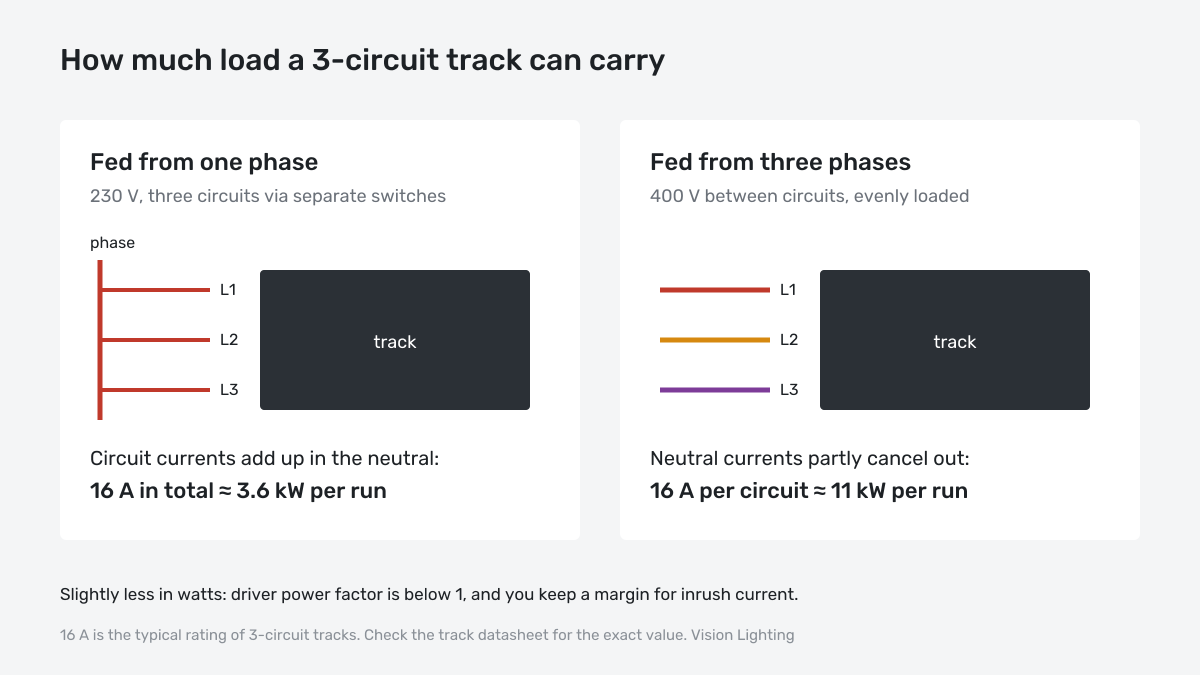
In watts the real limit is a bit lower. LED drivers have a power factor below one, and at switch-on they draw a short inrush pulse tens of times higher than the operating current. That is why the number of luminaires per circuit breaker (B or C curve) is taken from the driver datasheet rather than by dividing kilowatts by watts. There is one more point for the three-phase option: drivers with high harmonic distortion add current to the neutral even when the load is balanced. Good drivers with low harmonic distortion reduce this current, but with all three phases fully loaded you should check driver harmonics and the neutral current.
Example. The track is fed from one phase and carries 30 W spotlights. With a driver power factor of 0.9 and a 20% margin, the whole track takes about 85–90 spotlights, no matter how you split them between the three circuits. If the same spotlights are fed from three phases and spread evenly, roughly the same number fits on each circuit, provided the drivers have low harmonic distortion. The circuits are then loaded evenly.
What three circuits give a store
The first advantage of a 3-circuit track is control. One track can carry three lighting scenes:
- General lighting on circuit one.
- Accents on displays, shop windows and mannequins on circuit two.
- Night lighting for cleaning, overnight restocking or the shop window after closing on circuit three.

You can also split rooms or zones the same way, for example the entrance window, the main floor and the fitting rooms. When the layout changes a year later, a luminaire is moved to another circuit with the switch on its adapter, with no electrician and no new wiring.
On a 1-circuit track the same result needs several separate tracks with separate feeds, or control of each luminaire: through a DALI track with extra control conductors or wirelessly.
More power on one run. When the circuits are fed from three phases, a 3-circuit track carries up to 16 A per circuit, about 11 kW in total. That is three times what a 1-circuit track can deliver. For a supermarket with hundreds of spotlights it means fewer power feeds and less cable to the track.
A sturdier profile and a more reliable contact. A 3-circuit profile is more robust: TRACK-3F carries up to 20 kg per metre. The adapter locks into the track with a rotating lock and presses its contacts firmly against the conductors. In our experience on site, these contacts do not spark or burn even after luminaires have been moved many times.
When a 1-circuit track is enough
- A small shop, boutique, café or salon where all the light is switched by one switch.
- An apartment, office or small gallery with a few spotlights on a track.
- A project where every luminaire is controlled wirelessly and the track only supplies power.
For stores, supermarkets, showrooms and fuel stations we recommend a 3-circuit track. Almost every retail space needs to split its lighting into groups sooner or later, and switching from a 1-circuit to a 3-circuit track later means replacing both the track and the adapters of every luminaire.
1-circuit vs 3-circuit track compared
| Parameter | 1-circuit | 3-circuit |
|---|---|---|
| Supply circuits | 1 | 3 independent |
| Conductors | L, N, PE | L1, L2, L3, N, PE |
| Lighting groups per track | 1 | up to 3 |
| Supply | 1 phase 230 V | 1 phase 230 V or 3 phases 400 V |
| Load, typical | up to 16 A per track | up to 16 A per track from 1 phase, up to 16 A per circuit from 3 phases |
| Luminaire adapter | 1-circuit, no circuit selection | 3-circuit, with circuit selector |
| Best for | small rooms, one lighting group | stores, supermarkets, showrooms, fuel stations |
Adapters: why a luminaire may not fit the track
Adapters for 1-circuit and 3-circuit tracks are not interchangeable: they differ in shape and number of contacts. When buying luminaires, check which track the adapter is made for. Catalogs mark it as 1-phase and 3-phase, or 1-circuit and 3-circuit.
There are several 3-circuit systems on the market, such as Global (XTS), Eutrac and Stucchi, and an adapter for one system will not necessarily fit another. Before ordering, compare the adapter drawing with the track profile or ask the supplier.
A 3-circuit adapter has a circuit selector with positions 1, 2, 3. The circuit is selected after the luminaire is installed, and it should go into the wiring plan: otherwise in six months nobody will remember why the shop window switches on with the night lighting.
Common mistakes when installing a 3-circuit track
- Three circuits from one phase loaded to the limit. Each circuit stays within 16 A, but the neutral overheats because it carries the sum of the currents. From one phase, count 16 A for the whole track.
- Separate breakers for each circuit from one phase. Each breaker protects its own circuit, but the neutral, which carries the sum of the currents, is left unprotected. From one phase, use one common breaker of up to 16 A and switch the circuits with switches or relays after it.
- The track cannot be fully isolated. One circuit is switched off for maintenance while the other two are still live. With a three-phase feed, use a 3-pole breaker or a common isolator, and never break the neutral on its own.
- A closed loop. If the track runs around a square or rectangle, the TRACK-3F instructions require breaking the loop at the power feed: the busbar must not form a closed ring.
- A long run fed from one end. Voltage drops on long runs. It is better to feed the run in the middle or split it into several sections with separate feeds.
- Wrong earth side. In a 3-circuit track the earth conductor runs along one side of the profile, so connectors come in left and right versions. If the version does not match the layout, the connector will not fit.
- Luminaires with different adapters on one project. Part of the order is for a 1-circuit track, part for a 3-circuit one. It shows up during installation.
A third option: 48 V magnetic track
Apart from these two types there are low-voltage 48 V magnetic tracks. Luminaires are held by magnets and can be placed anywhere without a lock, and power comes from a separate power supply. This suits residential and small commercial interiors where a slim profile and tool-free access to luminaires matter. For sales floors with dozens of powerful spotlights a 230 V track is the usual choice. See 48V magnetic tracks.
How to choose a lighting track: a short checklist
- How many lighting groups do you need? One: a 1-circuit track will do. Two or three: a 3-circuit track.
- What is the total load per run? Up to 3.6 kW with a margin: one phase is enough. More: a 3-circuit track fed from three phases, or several power feeds.
- How will you control the light? Switches or relays: the track circuits. Dimming and scenes per luminaire: a track with DALI conductors or wireless control.
- Which adapter do your chosen luminaires have? It must match the track.
- What is the ceiling? The track is fixed directly to the ceiling, into a linear (baffle) ceiling or on wire suspensions under an open ceiling.
TRACK-3F track system by Vision Lighting
We manufacture the 3-circuit TRACK-3F track: three independent supply circuits, 1, 2 and 3 m sections, black or white, other RAL colours to order. The profile carries up to 20 kg per metre, and up to 10 kg can hang on one adapter. It comes with power feeds, straight, corner, T and X connectors, flexible connectors and wire suspensions. The track takes Global-standard 3-circuit adapters, so it fits both SHOOTER track spotlights with a 3F adapter and other manufacturers’ luminaires with a Global adapter. On SHOOTER the circuit is switched without removing the spotlight from the track. SHOOTER spotlights with DALI need a separate track, a 3-circuit track with DALI conductors, which we select for each project.
You can design the run in the track configurator: choose the shape and dimensions, and the configurator places connectors of the right version, end caps and suspensions, builds the specification with prices and gives you PDF and DXF files. If the luminaires need to be split between circuits and power feeds, we do it in a lighting design project.
FAQ
Can a three-phase lighting track be connected to a regular 230 V supply?
Yes. A 3-circuit («three-phase») track is connected to one 230 V phase, and the three circuits are used as three separate lighting groups. The total load on the track is then limited by the neutral rating, typically 16 A.
Can single-phase luminaires be used on a three-phase track?
No. A 1-circuit adapter does not fit a 3-circuit track profile. You need a luminaire with a 3-circuit adapter.
How many luminaires can one track take?
From one phase the whole track is limited to about 3.6 kW, from three phases to about 3.6 kW per circuit. The exact number depends on driver inrush current and the circuit breakers.
How do I choose the circuit for a luminaire on a 3-circuit track?
With the selector on the luminaire adapter, positions 1, 2 or 3. On most adapters, including SHOOTER track spotlights, you can change it without removing the luminaire from the track. Do it with the power switched off.
What is better for a store: a 3-circuit track or DALI?
A 3-circuit track gives up to three groups switched by switches or relays. DALI controls each luminaire individually, with dimming and scenes. For DALI there is a separate type of track: a 3-circuit track with DALI. Besides the three supply circuits it has two extra conductors, D1 and D2, that carry the control signal, and the luminaire’s DALI adapter picks it up from the track. The other option is luminaires with wireless control. The choice depends on how often you will change the lighting scenes.