Track Lights
 Linear Lights
 Track System
 Decorative Lights
 Recessed Light
 Pendant lights
 Surface mounted lights
 Panel lights
 Street Lighting
 Magnetic Lighting System 48V
 Magnetic Lighting System 48V
 Invertors
 Lighting control
Beam angle of a luminaire: what it is and why it matters
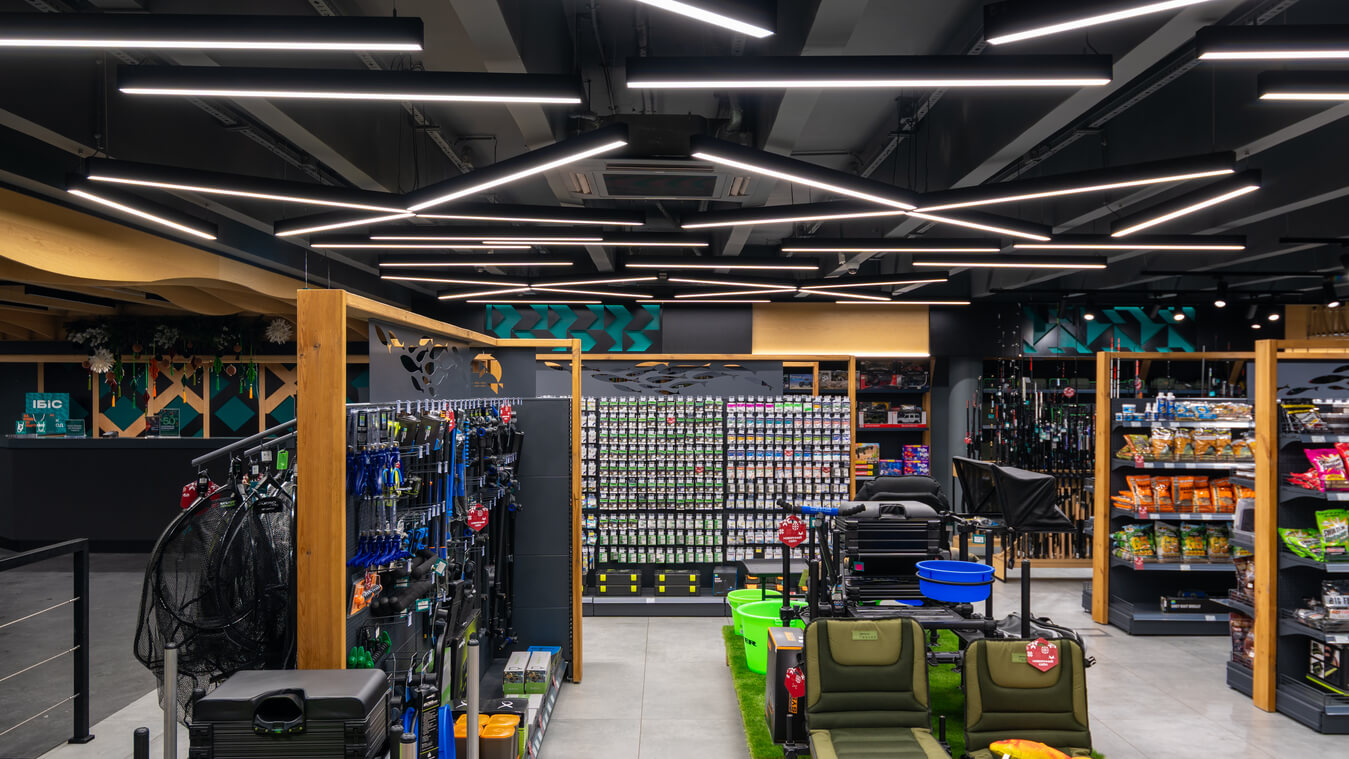
Two luminaires can have the same power and the same rated luminous flux and still give a completely different result in a room. One of the main reasons is a different beam angle. It decides how light is distributed in the space: how wide the light spot is, how bright the lit area will be, whether it is comfortable to look towards the light sources and how many luminaires the room needs.
The right beam angle gives efficient lighting without unnecessary cost: no overlit areas, no dark gaps and no surplus luminaires. The wrong angle, on the contrary, often leads to harsh contrasts, hot spots, extra shadows and a sense of discomfort even when the illuminance is sufficient.
What a beam angle is
The beam angle of a luminaire is the boundary of intense light emission, measured in degrees. Put simply, it is how wide the light beam opens: the spread of the luminous flux from the source.
A small beam angle gives a narrow, concentrated beam and a bright accent: the light spot is smaller, but the illuminance inside it is higher. A large beam angle creates a wide lit area: the light is softer and more even, but the accent effect is weaker. A simple analogy is a shower head with "jet" and "rain" modes: the jet hits one point at a distance (a narrow angle), the rain spreads the flow widely and softly (a wide angle). Light works in much the same way.
The practical rule is simple: the higher the ceiling and the narrower the angle, the smaller the light spot and the higher the illuminance in its centre. The wider the angle, the larger the spot and the more even the distribution, but the less pronounced the accent. That is why mounting height and the size of the area to be lit are always taken into account when choosing luminaire parameters: the number of luminaires depends on them.
Main types of beam angle
The boundaries of the ranges are approximate and depend on the task and the mounting height, but lighting design works with the following split.
Narrow angle
Roughly 3° to 30°. Used for accent lighting, when an object has to be picked out and attention directed to it: paintings, shop windows, exhibition displays, architectural details, interior elements and individual parts of a room. A narrow angle gives a crisp light spot and high local illuminance, so it is most often found in spotlights.
Medium angle
Roughly 40° to 90°. This is the range for local lighting: work areas, desks, reception counters, service zones and individual parts of a space. It balances concentration and width: the light stays directional, but without overly sharp edges or contrasting spots.
Wide angle
Usually 100° to 180°. Used for general lighting in offices, homes, sales floors and anywhere visibility and an even background matter. A wide angle fills the space with light and reduces the contrast between areas that are lit differently.
What the beam angle depends on
The beam angle is shaped by the design of the luminaire and the way the manufacturer controls the light beam. In practice it is a combination of optics, the characteristics of the LED module, how deep the source is set and the geometry of the housing.
Luminaire optics
Reflector
The shape of the reflecting surface determines the beam angle directly. A parabolic reflector with the light source at its focus gives a narrow parallel beam; the further the source is from the focus, the wider the angle. An elliptical reflector gathers light into a second focus, which produces a very concentrated beam. The angle is set when the reflector geometry is designed and cannot be changed after manufacture.
The key limitation of a reflector is that light leaving the source straight towards the viewer never reaches the reflector and creates stray light outside the main angle. These are "uncontrolled" lumens that blur the edge of the beam.
Lens
A lens controls the whole luminous flux from the source, both the central and the side part. The central zone of the lens refracts direct emission, while the cylindrical side surface reflects side emission inside the lens body through total internal reflection. Both streams leave through the exit aperture in the same direction.
The beam angle is determined by the curvature of the lens exit surface. A flat exit surface gives a narrow angle, a convex diffusing surface a wider one. The same source with different lenses gives a fundamentally different angle without changing the luminaire itself, which is why lens systems are often made interchangeable.
Combined system
The reflector forms the primary beam and the lens at the exit corrects it: narrows it, widens it or gives it a particular distribution profile. This makes angles possible that neither element can achieve on its own, for example a very narrow 3° to 8° beam with an even, flat brightness distribution inside and a sharp edge outside.
In other words, optics do not simply "narrow" or "widen" light: they redistribute the emitted flux in space. The more precisely the optical system controls every ray from the source, the lower the losses and the more predictable the result in a real project.
Diffuser
Frosted and prismatic diffusers usually increase the beam angle and make the light softer and more even. This helps in general lighting and reduces discomfort, but it can reduce directionality, so diffusers are used deliberately in accent tasks.
LED type and size
Large LED chips are harder to focus into a very narrow beam. So in accent solutions both the LED type and the right optics matter; otherwise, instead of a crisp accent, you get a blurred spot and stray light.
LED recess depth
The deeper the light source is set into the housing, the easier it is to form a more controlled beam and reduce glare. Deep recessing often gives more comfortable light, especially where the luminaire can be in the field of view.
Housing geometry
The shape of the housing affects the direction in which light leaves it and how light interacts with the inner surfaces. So the beam angle of downlights, track and linear luminaires can differ not only because of the optics but also because of their construction.
Examples with Vision Lighting luminaires
In practice the beam angle is not a line in a specification but a tool for building a lighting scheme around a task. One project almost always uses different angles: wide to give a base level and remove dark gaps, medium for local zones and work surfaces, narrow to place a precise accent and direct attention. This approach lets you control the result in advance: where the light spot will be, what the contrast will be, how many luminaires are needed and how to avoid stray light.
In our projects we treat optics as a key element of quality: lenses and reflectors form a clean beam without stray halos or losses. This is especially visible in accent lighting, where a sharp edge and predictable beam geometry matter, and in linear general lighting, where evenness without abrupt brightness changes is critical.
Below are a few typical scenarios that show how beam angles are chosen for different tasks and why control of the light beam matters in project lighting.
Spotlights and luminaires with a directed beam
Accent lighting uses narrow angles to pick out objects precisely and direct attention without stray light. Our range includes solutions with narrow optics down to 3°, in demand in exhibition spaces, museums and galleries, where a clean beam and predictable spot geometry are essential.
Linear luminaires
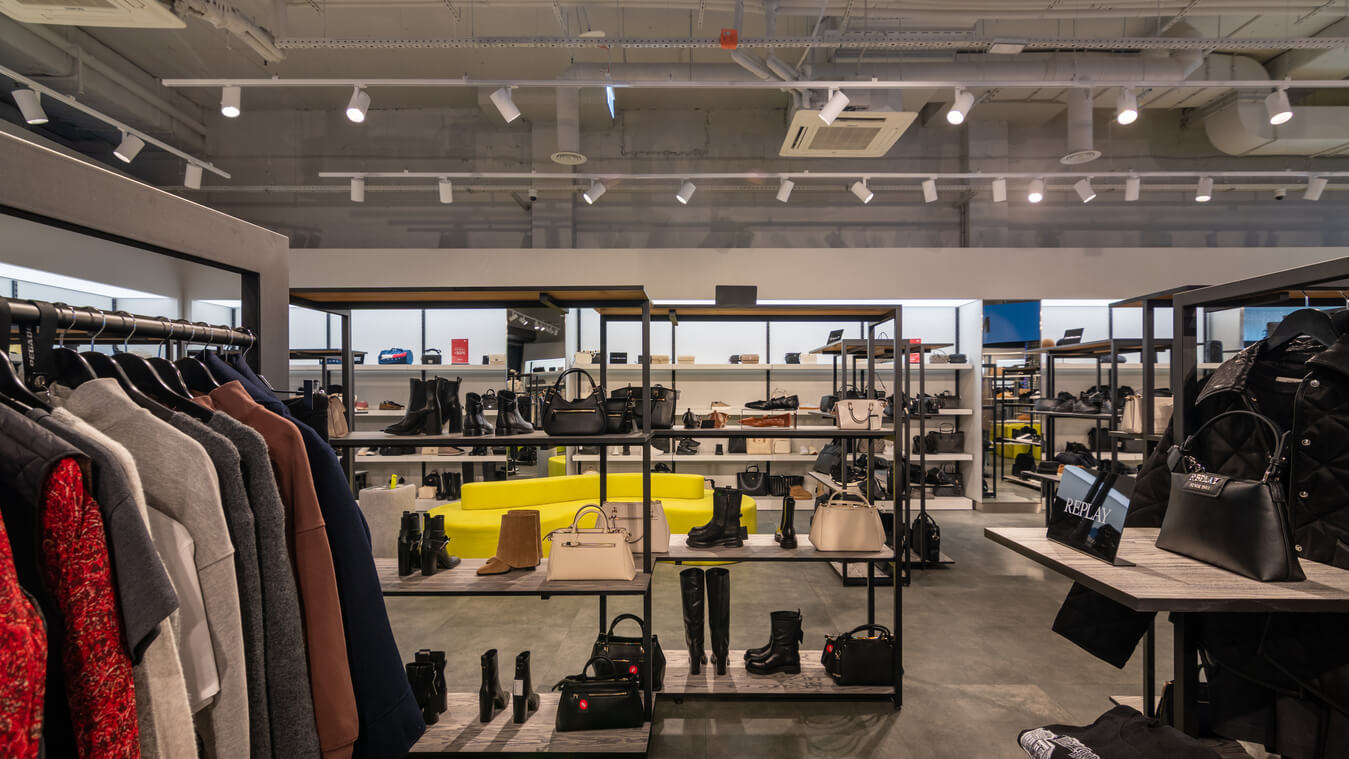
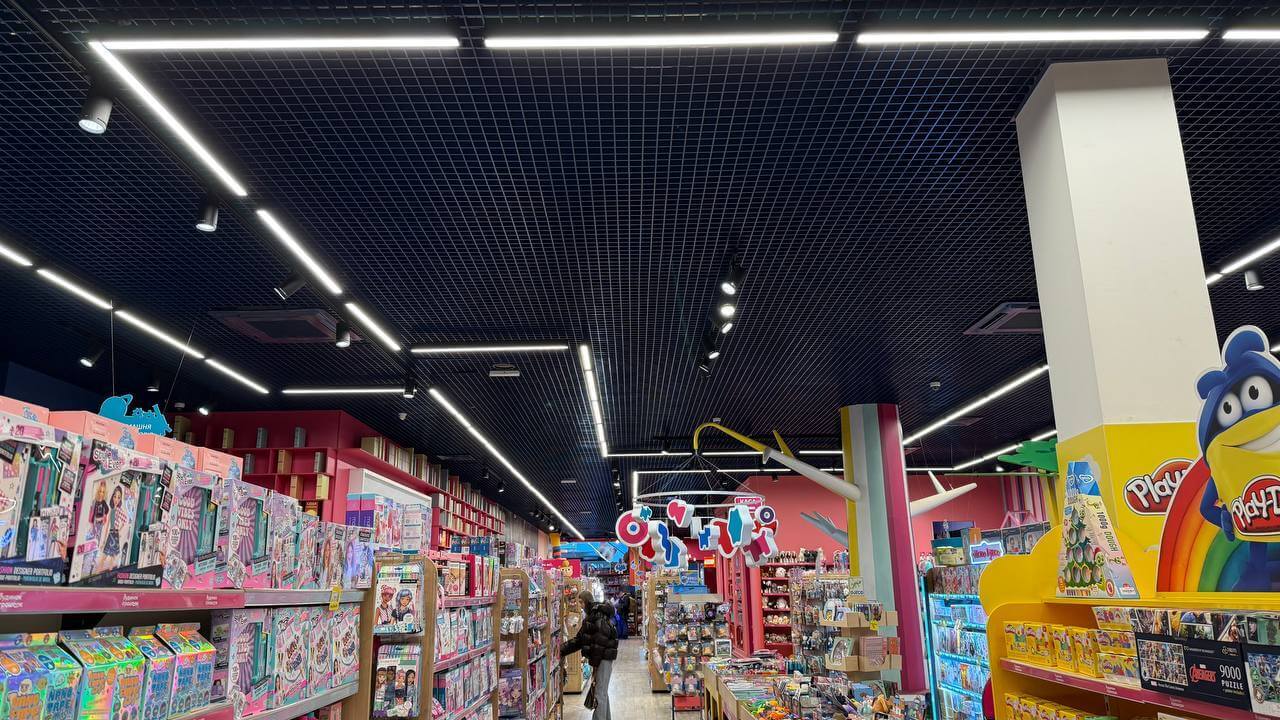
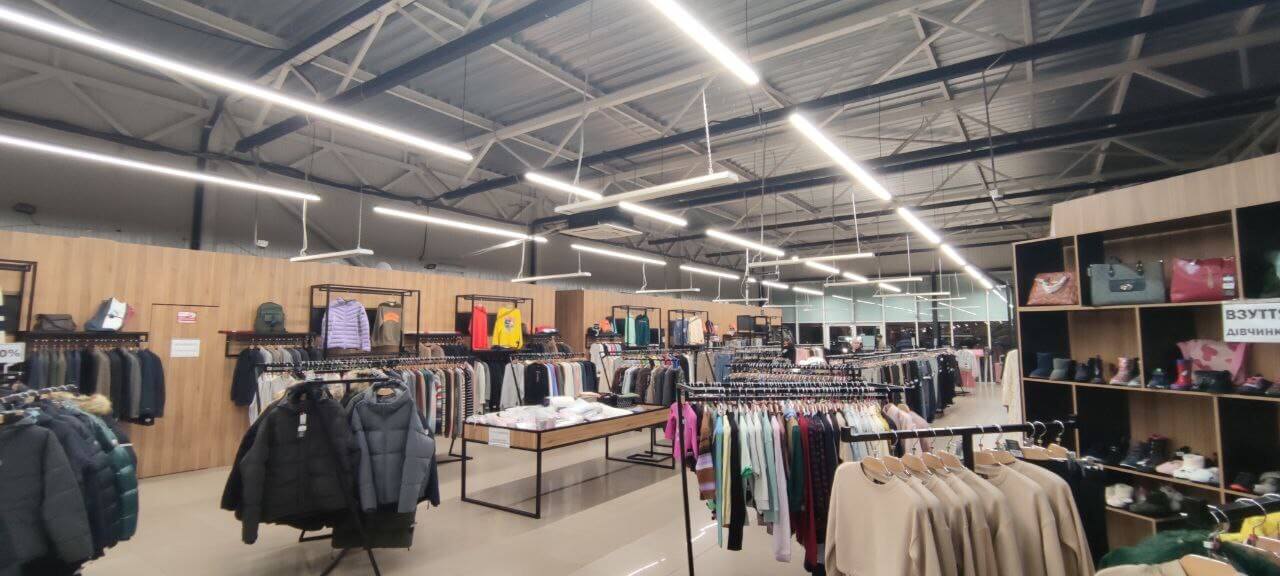
Linear luminaires are mostly used for general lighting and an even light field, without hard shadows or spots. They are the base solution for offices, commercial spaces and residential interiors, where comfort, good visibility and predictable lighting matter.
Task lighting
Work surfaces need a balance of brightness and comfort: enough illuminance to work comfortably, without glare or excessive contrast. In these cases medium angles, or a mix of medium and wide, are chosen so that the light clearly picks out the working plane without abrupt transitions.
Why the beam angle matters
The beam angle affects the evenness of the lighting, the perceived brightness, visual comfort, the risk of glare and the overall perception of the space. Narrow angles structure an interior and create accents; wide ones make the light calm and ambient.
In lighting design the beam angle determines:
- the number of luminaires and the power needed;
- the spacing between luminaires and the layout;
- whether illuminance standards can be met without overspending;
- layered lighting: general background, accents and work zones.
The right angle helps avoid dark areas, pick out important elements, keep energy use down and achieve professional lighting in which every luminaire has a specific job.
Conclusion
Different tasks need different luminaires: in one place a narrow accent, in another wide, even background light, and most often a well-planned combination. When choosing LED luminaires for a project, start with the task and the scenario, then pick the type of luminaire with the right optics.
Our showroom has luminaires with different characteristics. You can see how light changes with different beam angles and choose the solution that suits you. If needed, we will prepare a calculation and help you with the project.