Track Lights
 Linear Lights
 Track System
 Decorative Lights
 Recessed Light
 Pendant lights
 Surface mounted lights
 Panel lights
 Street Lighting
 Magnetic Lighting System 48V
 Magnetic Lighting System 48V
 Invertors
 Lighting control
Shop window lighting: accents, depth and the right product presentation
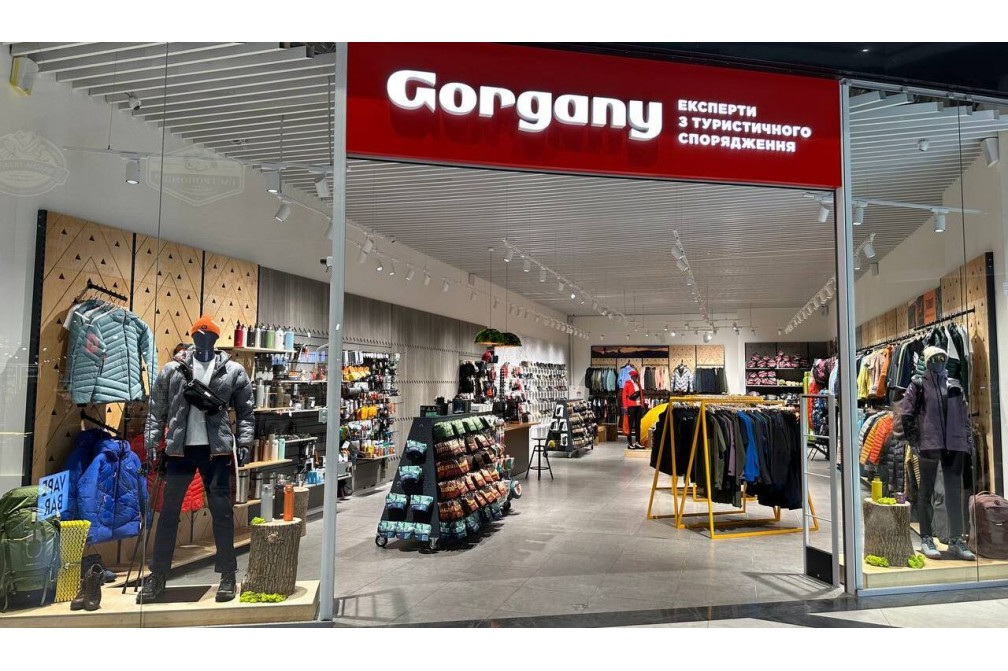
Shop window lighting should catch the eye at first glance. A passer-by or a mall visitor sees the display for only a few seconds, subconsciously judging the products and the mood of the brand to decide whether to go in.
Window lighting is different from ordinary sales floor lighting. It is not enough for it to be bright: it has to create an expressive scene. It should pick out the main product, show depth, remove random shadows, avoid strong reflections in the glass and keep the natural colour of materials. So shop window lighting is best treated as a separate task, not as an extension of the general ceiling light.
Why a shop window needs its own lighting
A shop window presents the brand in a busy visual environment. In a shopping mall there are neighbouring shops, bright signs, advertising screens and lit galleries. On the street there is also daylight, reflections in the glass, evening darkness, facade lighting and traffic. In these conditions the window has to stay noticeable and look attractive.
The main job of light is not just to make every object visible but to set priorities. The shopper should read the composition quickly: what matters most, which product to look at, what style the shop has and whether it is worth going in. For this, a window is usually designed with a combination of background light, accent beams and lighting for individual elements.
If a window is lit evenly, it may look tidy but flat. Everything will be visible, but nothing will be the centre of attention. If you use only a few sharp accents with no general light, you get dark areas and too much contrast. The right result comes when light supports the composition rather than simply flooding it from above.
What to consider when lighting a shop window
Shop window lighting depends on the window depth, the shop format, the type of product and where the shopper views the display from. A window in a shopping mall and one facing the street need different approaches. The range matters too: a clothing boutique needs to show silhouette, fabric and volume; a cosmetics shop needs packaging colour, shine, neatness and detail; an electronics shop needs form, texture, a high-tech feel and a neat display.
Before choosing luminaires for a window, assess several parameters:
- from what distance the shopper sees the window;
- whether there is glass and how strongly it reflects the surroundings;
- the depth of the window and how many levels it has;
- which products should be the main accents;
- whether the display changes with the seasons;
- whether the window should stay visible in the evening after the shop closes;
- which colour temperature suits the brand style and the type of product.
For example, a shallow window with glass needs especially careful aiming: if a spotlight is badly placed, the shopper will see the reflection of the luminaire instead of the product. In a deep window, remember the background so it does not get lost behind bright objects in front.
Accents as the basis of window lighting
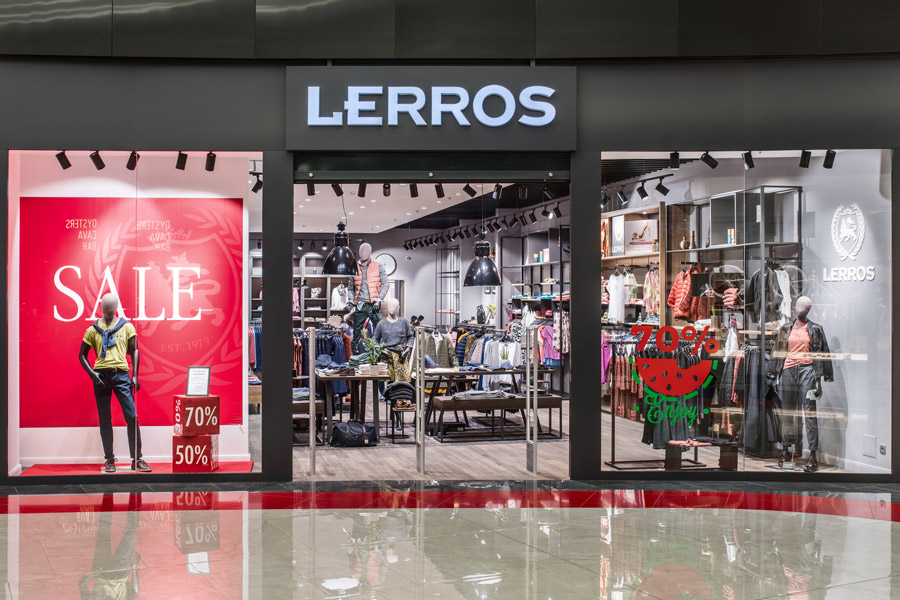
A shop window almost always needs accent light. It is what picks out the product and creates a sense of depth. A directional beam can light a mannequin, accessories, decorative objects, a piece of furniture, a new collection or seasonal offers. Without accents a window can look like an ordinary lit shelf rather than a thought-out display.
Track luminaires and adjustable spotlights are often used for directional light in windows. Their advantage is flexibility: you can aim light at a specific object, change the angle after products are moved, and if needed make one part of the window brighter and another dimmer. This is especially convenient for shops that update their displays regularly.
Choosing the right beam angle matters. A narrow beam is good for a precise accent: it picks out the product and creates contrast. A medium angle helps light a group of items. A wider angle is needed for soft lighting of the background, a wall or a large surface. One window can use luminaires with several beam angles at once: the narrowest for the main product, a wider one for the background, and a third for the lower level or side elements.
Window lighting without glare or overlighting
Window glass easily turns badly aimed light into glare. The shopper then sees a bright spot, a reflection of the ceiling, a luminaire or their own silhouette, but not the product. This is especially noticeable in the evening, when it is bright inside the window and dark outside.
To reduce glare, luminaires are aimed away from the glass and from passers-by's eyes. Light should fall on the product at an angle that sends the reflection to the side rather than back to the viewer. Sometimes it makes sense to use more low-power sources instead of a few very bright spotlights. This makes shadows and overlighting easier to control.
In glazed windows the background matters too. If the back wall is dark and barely lit, the composition can look heavy. If the background is too bright, the product loses its visual depth. So it is best to separate background and product light: one gives the display depth, the other draws attention to the main elements of the window composition.
Colour temperature and colour rendering
The colour of light should suit the product and the impression the brand wants to create in the shop. Warm light makes a window cosier and brings out natural materials, clothing, accessories, wood and decor. Neutral white light is cleaner and more versatile. A cooler temperature can emphasise a high-tech feel, freshness or a minimalist interior, but used badly it makes a window off-putting.
The colour rendering index of the luminaires is just as important for good window lighting. If shades are distorted, the product in the window does not look the way it really is. This is critical for clothing, footwear, cosmetics, accessories, jewellery, furniture and decor. The shopper does not think about luminaire specifications; they simply react badly to a product whose colour looks dirty, dull or unnatural and not what they expected.
For window lighting it is better to choose LED luminaires with good colour rendering, because saving on this parameter shows immediately: white turns grey, skin looks unnatural, black loses depth and some shades become hard to tell apart.
LED shop window lighting
LED window lighting, like general shop lighting, is convenient because it lets you match specifications precisely to a specific task. LED luminaires come in a wide choice of power, colour temperature, beam angle, mounting type and control. They heat the window less, last a long time and suit everyday use in a commercial space.
But it is important to understand that LED window lighting is not one universal type of luminaire. Picking out a product needs a track spotlight, lighting a shelf needs a linear module, and soft background light needs wide-beam luminaires. A decorative outline can be done with hidden LED strip. The result depends not on the fact that a luminaire is LED, but on how precisely the lighting is designed and the equipment chosen.
If the display changes often, it is better to use adaptable solutions that are quick to reset: track systems, adjustable luminaires and adjustable spotlights. If the window display is static, you can design a layout with fixed accents and hidden lighting.
Window lighting in shopping malls and on the street
A window in a shopping mall competes with the light around it. Next to it are bright neighbouring shops, illuminated signs, advertising panels and general gallery lighting. So the window should not just keep up with them. But that does not mean simply making it as bright as possible. Strong light without composition quickly tires the eye and looks unimpressive.
In shopping malls precise accents, clean vertical lighting and a clear hierarchy work well: the main product, secondary elements, the background. A shopper walks past a window in a few seconds, so light has to show quickly what is sold here and why it is worth a look.
A street window works differently. In the daytime sunlight and reflections get in the way, in the evening the dark street behind the viewer. It needs a plan for different times of day. In the evening the window can stay lit even after the shop closes: it remains visible, supports brand recognition and makes the facade attractive.
Which luminaires suit shop window lighting
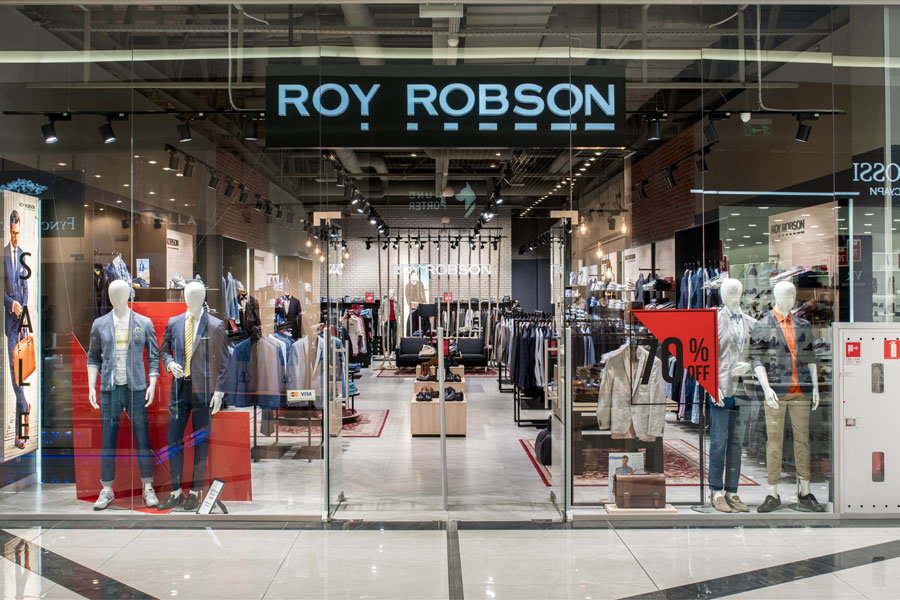
Most windows use not one type of luminaire but a combination of several. Track spotlights are for accents: they are convenient for picking out mannequins, individual products, seasonal offers and places where the display changes often. Adjustable luminaires give a visually clean ceiling when you need directional light without a visible track system.
Linear LED lighting works well on shelves, in niches and on long horizontal surfaces. Hidden lighting adds depth and brings out the background and the outline of the window, but it does not replace the main accent light. In a well-thought-out layout all these elements combine into one clear lighting composition.
In a well-lit window the luminaires should not be the main focus. The shopper sees the product and takes in the overall mood of the display, not individual spotlights or bright spots of light.
Common mistakes in shop window lighting
The first mistake is light that is too even. When the whole window is lit the same way, it loses expressiveness. The product is visible, but the eye does not stop on anything. A composition needs a focal point, otherwise the window does not attract and loses out to better thought-out displays.
The second mistake is overlighting, when people try to make a window noticeable through brightness alone. The result is glare, harsh shadows, unpleasant contrast and a sense of overload. Brightness on its own does not make a window attractive; how light is distributed and where the accents are matters more.
The third mistake is luminaires aimed the wrong way. If light hits the glass or a passer-by's eyes, the window becomes hard to look at. People see a reflection, not the product. This is especially typical of windows with glossy surfaces, mirrors, metal and transparent elements.
The fourth mistake is poor colour rendering. For a window this is critical, because the product has to look convincing. If colours are distorted, materials look cheaper, shades become unclear and dull, and the display looks worse than it really is.
The fifth mistake is lighting that cannot be re-aimed. If the window display changes every season but the luminaires are fixed with no way to adjust them, after a while the sameness will reduce attention to the window. So for changing displays it is better to plan track or adjustable lighting from the start.
How to tell a window is lit correctly
A well-lit window is taken in quickly and intuitively. It has a main accent, clear depth, enough brightness and the right colours. The glass does not get in the way of seeing the product, the light does not dazzle, the background does not compete with the display, and the whole composition looks coherent.
Check the window not only from inside the shop. Go outside or into the mall gallery and look at it as a shopper would: from a distance, on the move, from different angles, in the daytime and in the evening. Sometimes light looks right from inside, but from outside you see only reflections or overlit spots.
Window lighting is best planned together with the display itself. Light will not fix a chaotic or unattractive layout, but it can greatly strengthen a well-composed one. It helps the product look more expensive, cleaner and more expressive, provided that every light source has its own job.
Summary
Shop window lighting is about working with the shopper's attention and interest. It is not enough to make the product visible: it has to be shown expressively, with the right colours, depth, contrast and accents.
Windows most often use LED luminaires, track spotlights, adjustable models, and linear and hidden lighting. But a good result depends not on the number of luminaires but on how well they are placed and set up.
Good window lighting does not draw attention to itself. It stays an almost invisible part of the display that makes the products expressive, removes visual distractions and lets the idea of the composition be read quickly.
FAQ: questions about shop window lighting
What lighting is best for a shop window?
A combination works best for a shop window: accent luminaires to pick out products and soft background light for depth. Where needed, linear or hidden lighting is added for shelves, niches and decorative elements.
Are track luminaires suitable for shop windows?
Yes, track luminaires suit shop windows well, because they can be aimed at a specific product and re-aimed when the display is updated. They are a convenient solution for shops whose windows change regularly.
How do you avoid glare in a shop window?
Aim luminaires so that light falls on the product, not on the glass or into the shopper's eyes. In some cases several adjustable light sources at well-chosen angles work better than one very bright spotlight.
Why does colour rendering matter for window lighting?
Colour rendering affects how natural the product looks. If light distorts shades, clothing, footwear, cosmetics, accessories or decor can look worse than they really are.
Can LED strip alone be used to light a shop window?
LED strip can be a good extra solution for shelves, outlines and decorative elements, but it is usually not enough as the main light. A complete window display normally needs accent luminaires or spotlights.